
Transgender Identity, Marginalisation and State Responses: A Comparative Study of Tamil Nadu, Maharashtra and West Bengal
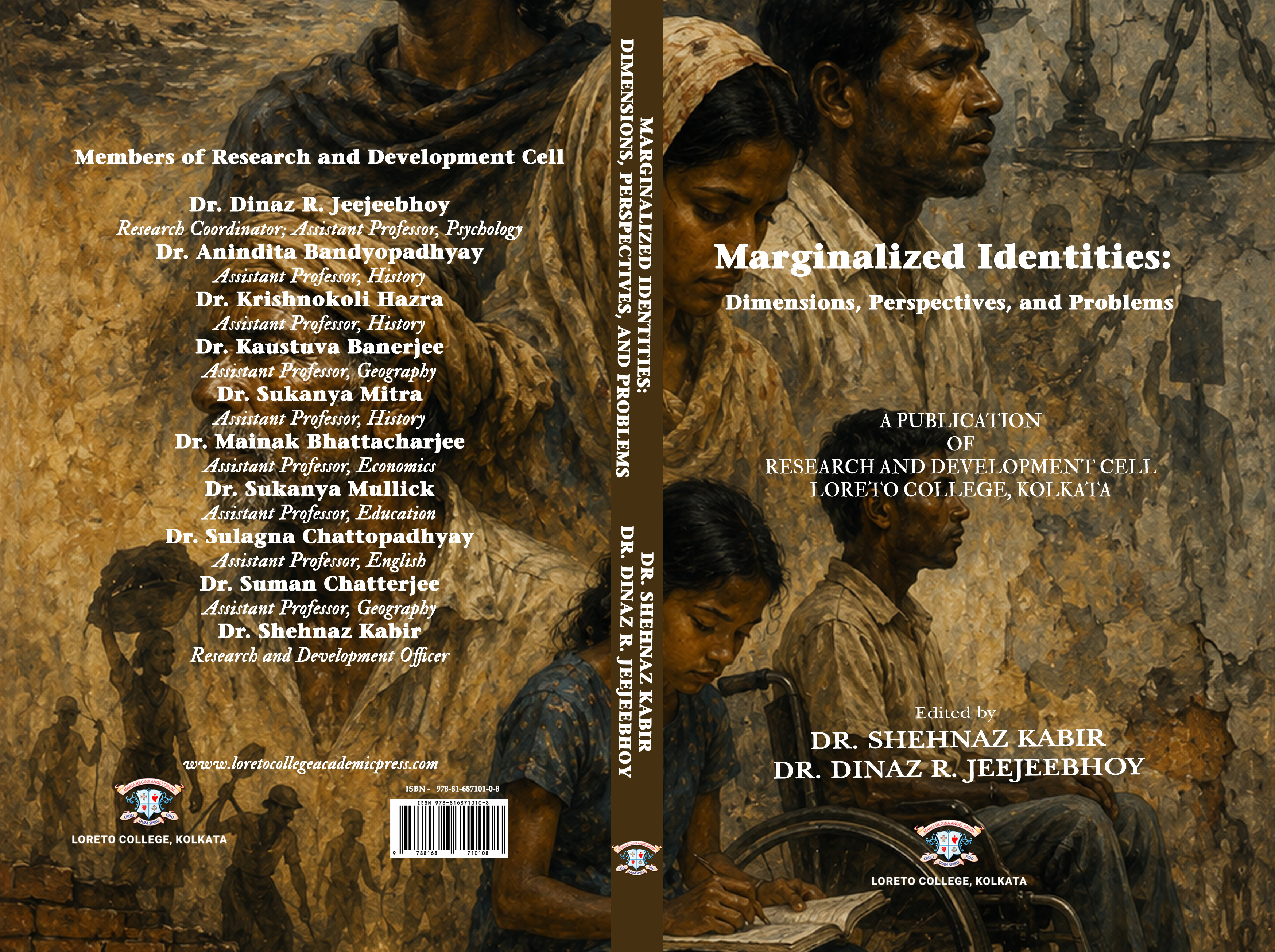
Published 03.07.2026
Keywords
- Transgender identity,
- Marginalisation,
- Gender binaries,
- State policy interventions,
- Transgender welfare and development boards
How to Cite

This work is licensed under a Creative Commons Attribution-NonCommercial 4.0 International License.
Abstract
The transgender community in India has long experienced marginalisation due to rigid gender binaries, social stigma, and limited institutional recognition. Despite recent legal advancements, transgender persons continue to face discrimination in education, employment, healthcare, family life, and access to public spaces. This paper examines the relationship between transgender identity, socio-economic exclusion, and state responses through a comparative study of Tamil Nadu, Maharashtra, and West Bengal. Using a qualitative, descriptive, and comparative research design, the study relies on secondary data drawn from academic literature, government reports, census data, policy documents, and credible media sources. Thematic analysis is employed to identify key areas of marginalisation, while a comparative framework evaluates state-level initiatives such as transgender welfare and development boards, identity documentation, healthcare provisions, educational inclusion, and livelihood support. The findings reveal notable inter-state variations: Tamil Nadu emerges as a pioneer in institutional welfare mechanisms, Maharashtra reflects progressive policy intent with conceptual limitations, and West Bengal adopts a development-oriented approach. While these initiatives signal important progress following the 2014 NALSA judgement, persistent challenges remain in effective implementation, social acceptance, and participatory governance. The paper concludes that legal recognition must be complemented by inclusive social attitudes and sustained, rights-based policy interventions to ensure dignity, equality, and empowerment for transgender persons in India.
DOI - https://doi.org/10.66496/LCAP.9788168710108.2026.191-211