
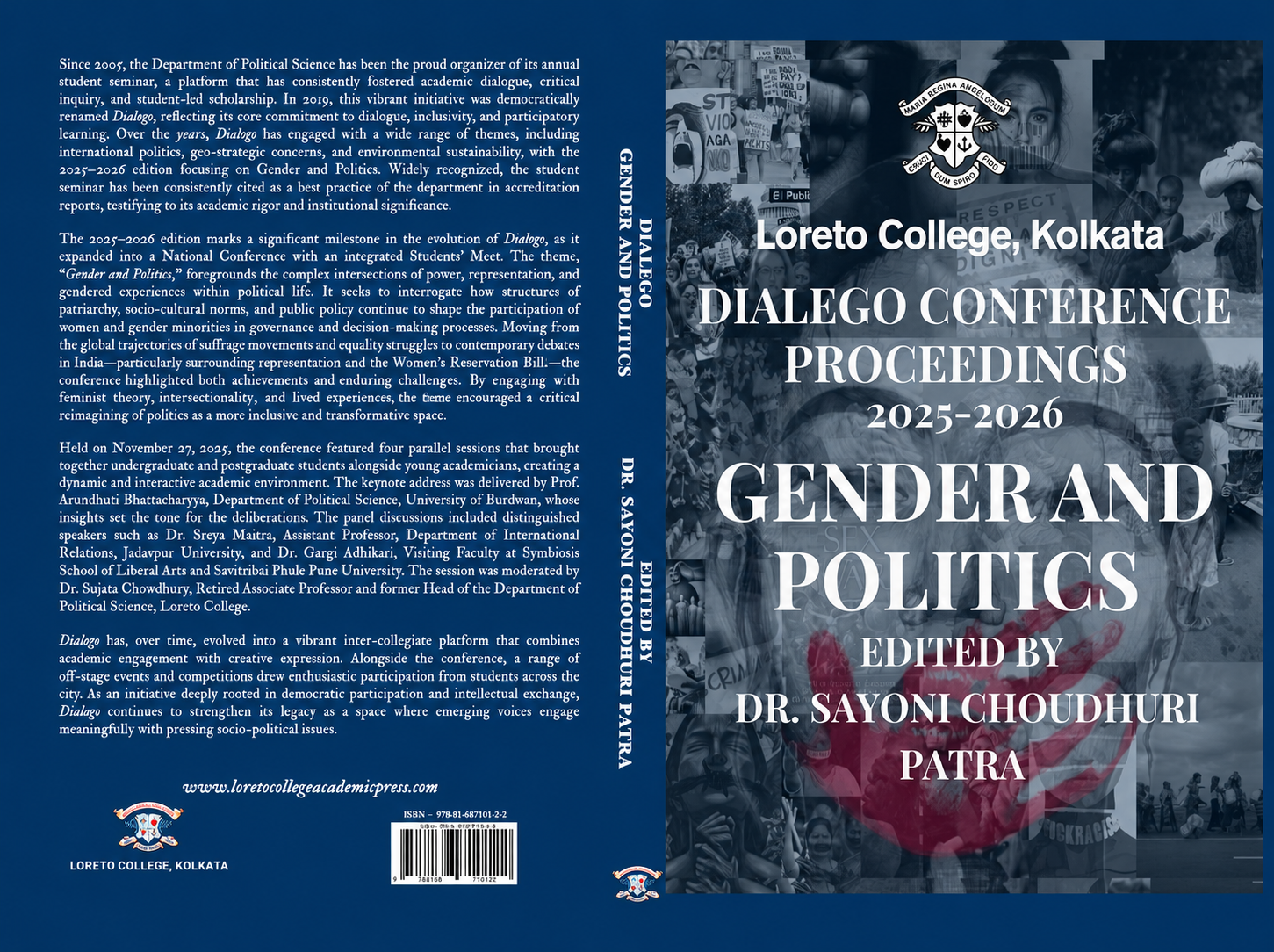
Published 27.07.2026
Keywords
- Sri Lanka,
- women,
- Sinhala women,
- Tamil women,
- civil war
- violence ...More
How to Cite

This work is licensed under a Creative Commons Attribution-NonCommercial 4.0 International License.
Abstract
Women in Sri Lanka hold multiple narratives. They are free citizens enjoying adult suffrage since independence, but the post-colonial political trajectory of Sri Lanka has challenged their liberty repeatedly, particularly harsh to women from minority communities. Women from Sinhalese and Tamil communities were severely affected by the civil war in Sri Lanka and the legacy of war continues to impose hardships. Seeking to set the agenda for reforms, women lack of information on missing relatives, face displacement from their land, suffer from economic deprivation, psychological trauma, vulnerability to sexual violence and exploitation, along with a militarised environment that reinforces the victimization on an everyday basis. Promises by the central government to the United Nations Human Rights Council in 2015 have failed to materialise even as the urgent economic and psychosocial needs of all conflict-affected groups remain unmet. As women carry the legacy of war as a burden in their everyday lives, their role in shaping transitional justice policies cannot be ignored. The government largely has ignored the report of its Consultations Task Force (CTF) on national reconciliation processes, which conferred widely with women, particularly those women who reside in conflict-affected areas. This gap in expectation of rights and delivery of justice stems largely from the lack of representation of women in Sri Lanka’s political affairs. For decades after independence, the proportion of women in Sri Lanka’s parliament stagnated at around 4 per cent. This has contributed to reinforcing conservative and patriarchal perceptions of women in Sri Lankan society. As women continue to grapple with gender-based violence, the UN Population Fund reports that 90% of Sri Lankan women and girls have faced sexual harassment in public buses and trains, while 1 in 4 women report having experienced physical and/or sexual violence since age 15 (Department of Census & Statistics, 2019). Efforts to end violence against women often face barriers, including legal gaps and social stigma. The lecture would connect the gendered narratives of the past and present for women in Sri Lanka and seek to find answer to the one pressing question: is the Sri Lankan democracy doing enough for the rights and security of its women?
DOI - https://doi.org/10.66496/LCAP.9788168710122.2026.40-57