
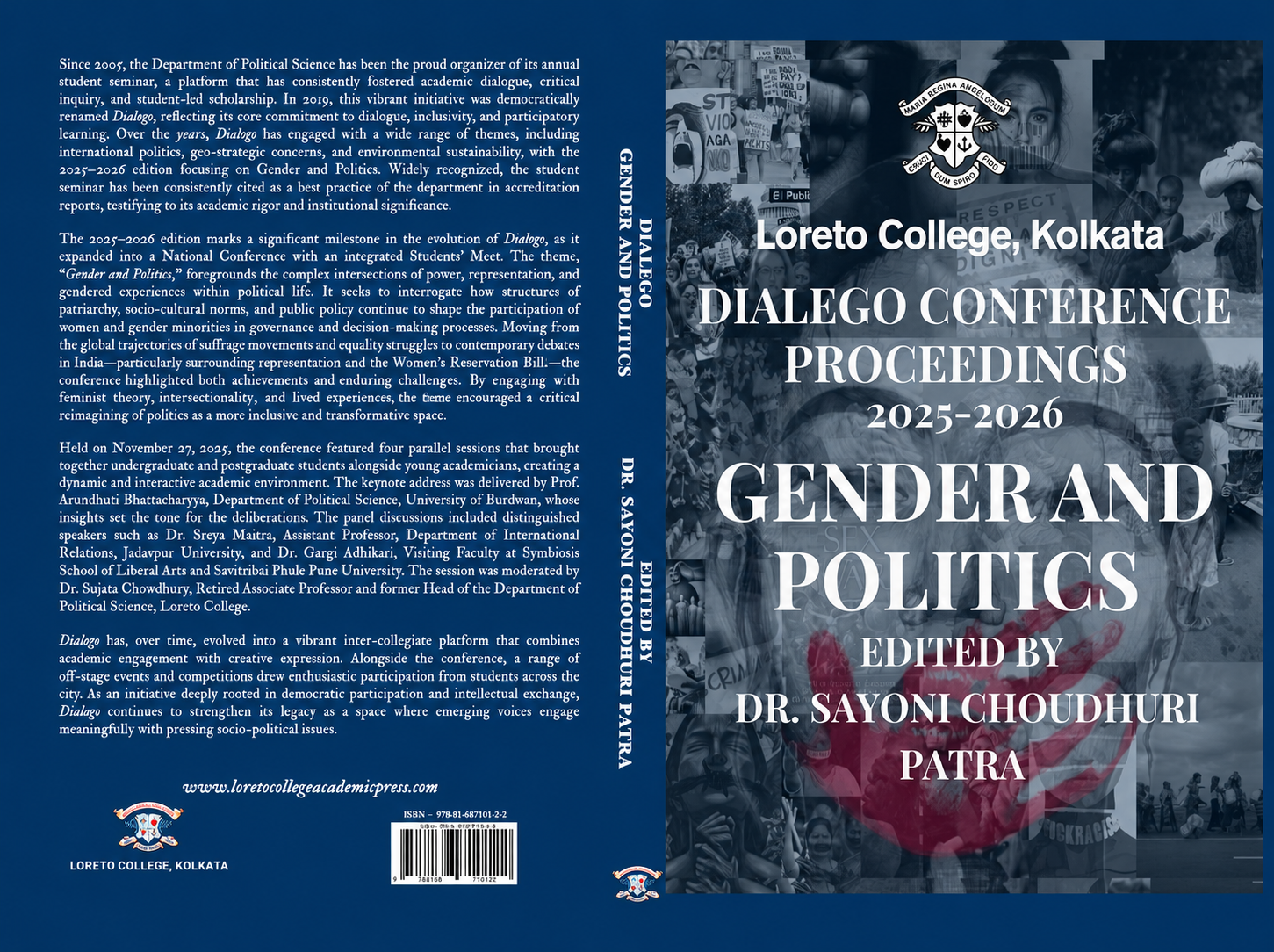
Published 27.07.2026
Keywords
- Gender,
- women,
- citizenship,
- Assam,
- NRC
- bureaucracy,
- exclusion,
- structural inequalities,
- state,
- South Asia,
- intersectionality ...More
How to Cite

This work is licensed under a Creative Commons Attribution-NonCommercial 4.0 International License.
Abstract
This study explores how women were unnecessarily excluded and threatened with the fear of exclusion by the state during the National Register of Citizens (NRC) process in Assam and their importance in the gendered nature of citizenship and bureaucracy in India. Even though the NRC was presented as an unbiased administrative exercise to recognize “genuine citizens” but in reality there exists social and gender differences in this practice. During the process, women were asked to produce lineage proofs which was found difficult especially for the rural, widowed, poor women and those from marginalized sections.
My research revolves around the particular question that in what ways did the bureaucratic process of Assam NRC make citizenship gendered and how do these difficulties produce deeper structural inequalities within the Indian state.
By using empirical examples drawn from case studies, field reports, observation, the paper examines patterns of gendered exclusion. For example, it has been found that many married women in Barpeta district in Assam could not produce their official legacy documents since they moved to their husband’s place after marriage at a very young age and during that time such documents for women were not given much importance by the women’s house. Then widows from families in Dhemaji and Morigaon were regarded as “doubtful” voters since their property papers were destroyed during the floods. There exists several women who appeared before Foreigners Tribunal were regarded as “non citizen” because of little disparities in their father’s document like spelling mistakes, in such cases where men were less like to be penalized for.
By tracing these lived examples, it is clear that the NRC process was more hazardous for women as the bureaucratic authority favoured written records over social reality. Verification camps, lineage proofs, tribunal hearings not only reflect the gendered nature but also emphasized it. The study, thus calls for rethinking citizenship process so they could consider the structural barrier faced by women during NRC rather than reproducing them.
DOI - https://doi.org/10.66496/LCAP.9788168710122.2026.324-340