
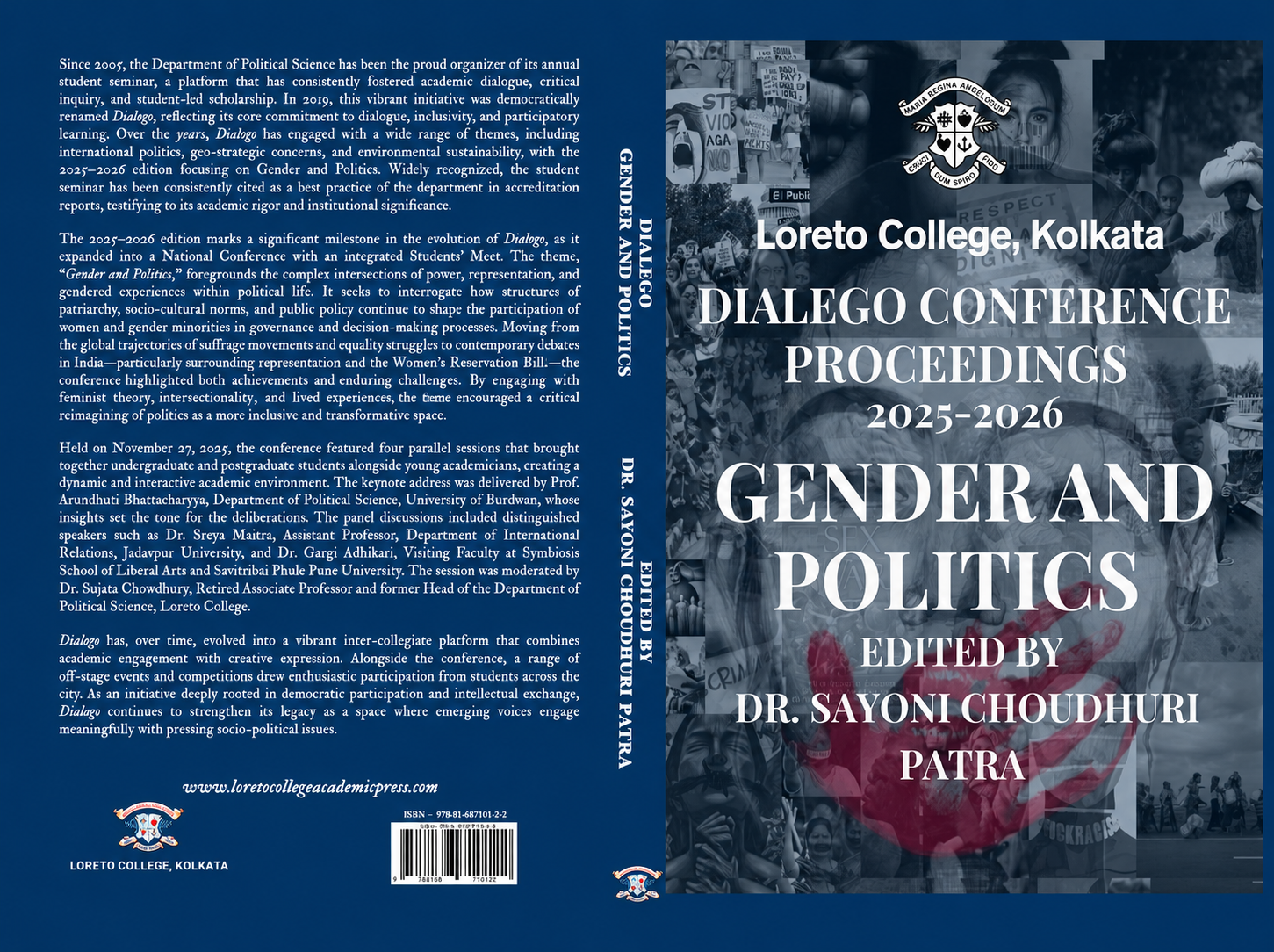
Published 27.07.2026
Keywords
- Public Policy,
- LGBTQIA+ Politics,
- Queer Rights,
- Caste,
- Class
- Gender Intersectionality,
- Recognition and Redistribution,
- Identity Politics,
- India ...More
How to Cite

This work is licensed under a Creative Commons Attribution-NonCommercial 4.0 International License.
Abstract
Amidst the diverse population of India lies the increasingly visible LGBTQIA+ community, driven by the collective demand for efficient policy formulation and resource allocation.
Often dismissed as a product of western narratives, this community is perceived to be a “liberal” weapon, intent on destroying the “core” cultural and religious values of the country. Yet, it is our inevitable reality that this community is a key demographic with regard to both electoral politics and political capital, legally recognised but materially deprived. This paper argues that the paradoxical life of the LGBTQIA+ community is not a coincidence but instead, a byproduct of the politics of policymaking in India, ridden with theoretical and practical fault lines. Drawing primarily on Carl J. Friedrich’s Policy Analysis framework, and Nancy Fraser’s Theory of Justice, this paper demonstrates the existing policy gaps as strategic political decisions rather than knowledge deficits. Employing theories of identity politics, and an intersectional lens of analysis, this paper connects the intersectionality of caste, class and gender identities to the differentiated spectrum of rights and political protection, within the LGBTQIA+ community. Against this backdrop, built on a theoretical and qualitative methodology, the paper examines key policy domains of politics, economics, security and legality, while also creating a comparative analysis between India and the United States of America, with respect to the strategic advantage of electoral inclusion of the community, realised, and wielded in politics across both the countries. Ultimately, this paper contributes to the intersectional discipline of Gender and Politics, by reframing existing debates and focusing on the dual lens of strategic exclusion as well as, inclusion of the community in Indian politics and policy making. It reveals the Indian state’s bifurcated approach of governance that allows for symbolic recognition, without strategic transformation.
DOI - https://doi.org/10.66496/LCAP.9788168710122.2026.278-296