
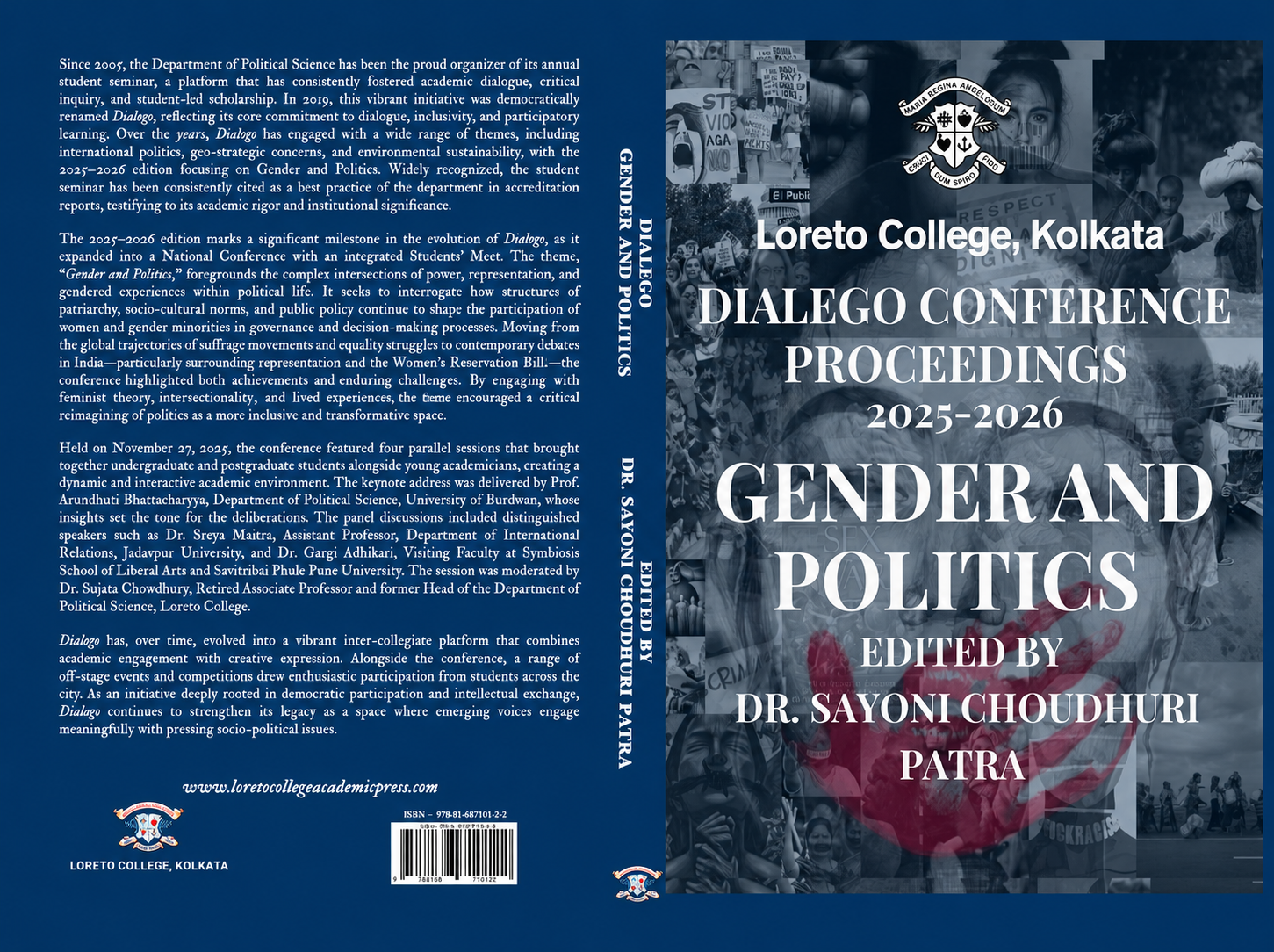
Published 27.07.2026
Keywords
- Women empowerment,
- Self-Help Groups,
- socioeconomic empowerment,
- familial empowerment,
- political empowerment
- measures to better the SHG initiative ...More
How to Cite

This work is licensed under a Creative Commons Attribution-NonCommercial 4.0 International License.
Abstract
A democratic system can function meaningfully only when individuals are aware of their rights and possess the capacity to exercise them.
Women, especially in India lack the basic means to stand up for their rights. Even if they are given some political voice, most of it is actually exercised by their husbands or some other patriarchal figure. Giving a woman the mere right to vote or reserving seats is not enough.
Women will have their voices heard in politics only when they are empowered, not only politically but also economically and socially.
Self-Help Groups (SHGs), promoted by NABARD since the early 1990s, represent a significant institutional mechanism aimed at enhancing women’s access to credit, savings, and collective organization. Operating largely on trust and without collateral, these groups have evolved into an important instrument of microfinance and grassroots mobilisation.
The paper examines the impact of SHGs on women’s empowerment in Kolkata, focusing on economic, social, familial, and political dimensions leading to political empowerment. The study uses both primary and secondary data. Survey was conducted over 50 Self-Help Groups in Kolkata City. SHGs existing for at least three years were chosen for the study. Interview was taken with a framed questionnaire.
The findings indicate that while SHGs have contributed substantially to familial and economic empowerment, their impact on political participation remains limited. Nevertheless, they play a crucial role in fostering confidence, solidarity, and gradual transformation among lower class women living in Kolkata.
DOI - https://doi.org/10.66496/LCAP.9788168710122.2026.254-277